Category: News

  • The Digital Transformation Journey of Universities

    The Digital Transformation Journey of Universities

    Bridging the Digital Divide: How Universities Can Adapt to Serve All Learners with Digital4All

    In the fast-evolving landscape of higher education, universities are facing a pressing challenge: ensuring digital learning is accessible and inclusive for all students. As more institutions transition to online and hybrid learning, the digital divide has become increasingly apparent. Some students thrive in virtual environments, while others struggle due to a lack of resources, support, or digital literacy. To address these challenges, initiatives like our Digital4All project are supporting universities worldwide in building digital capacity, training faculty, and implementing inclusive policies.

    A New Era of Learning

    The shift to digital learning accelerated during the pandemic, forcing universities to rethink their traditional teaching methods. However, many institutions realized that simply moving content online was not enough. A truly inclusive digital strategy requires thoughtful planning, training, and investment in technology that supports all learners, including those with disabilities or limited access to reliable internet.

    Take, for example, the case of University of Michigan, which recently launched a comprehensive initiative to enhance digital accessibility [1]. Through faculty training programs, new student support services, and a digital equity fund, the university is willing to ensure that no student is left behind. These efforts align closely with our project Digital4All, which is dedicated to equipping higher education institutions with the tools and knowledge to create equitable digital learning experiences. By integrating works like Digital4All’s best practices, the universities can  increase student engagement, reduce dropout rates, and improve overall digital learning experiences.

    Key Strategies for Inclusive Digital Learning

    1. Faculty and Staff Training – Universities are equipping educators with the skills needed to create engaging and accessible digital courses. Training covers topics such as assistive technologies, inclusive course design, and personalized learning approaches, all of which are central to the Digital4All initiative.
    2. Student Support Systems – Providing digital literacy workshops, tech support hotlines, and financial assistance for students who need devices or internet access helps bridge the digital divide.
    3. Accessible Learning Materials – Institutions are adopting best practices like using closed captions, screen-reader-friendly documents, and multiple content formats to accommodate different learning styles.
    4. Collaborations and Partnerships – Universities are forming alliances with tech companies, non-profits, and government agencies to secure funding and resources for digital transformation initiatives. Digital4All willing to play a key role in these collaborations, offering a structured framework to guide universities toward inclusive digital learning.

    A Future of Equal Access

    As universities continue their digital transformation journeys, the focus remains on ensuring that every student, regardless of background or ability, has equal opportunities to succeed. Digital4All is leading the way by providing research-backed strategies and innovative solutions to make higher education more accessible and inclusive.

    Through strategic investments and inclusive policies, institutions are setting a new standard for higher education—one where technology empowers, rather than excludes. With the support of projects like Digital4All, universities are not just adapting to change; they are shaping the future of learning for all.

    References

    [1] https://record.umich.edu/articles/university-announces-initiative-to-ensure-digital-accessibility/ 
  • Digital Inclusion in Cyprus Universities: Key Findings from the Digital4All Project

    Digital Inclusion in Cyprus Universities: Key Findings from the Digital4All Project

    As part of the Digital4All Project, we explored how digital tools are used in Cyprus universities and how they can better support all students. Our research included both desk studies and discussions with educators. Here’s what we found:

    What We Learned from Desk Research:

    • The COVID-19 pandemic accelerated the use of digital tools like Moodle, Blackboard, and Microsoft Teams in universities. However, not all students had equal access to devices or the Internet, which created challenges for many.
    • Students with disabilities or learning difficulties faced extra barriers, with not enough support to help them adjust to online learning.
    • Universities started to realise the need for more inclusive digital learning, making sure that all students, no matter their background, could succeed.

    What Educators Shared in Focus Groups:

    • Teachers said they consider students’ different needs when designing online courses. But many feel they need more training to keep up with new technologies and teaching methods.
    • Tools like AI and online platforms have great potential to improve learning, but teachers want more support to use them effectively and ethically.
    • Both teachers and students agree that universities need to improve their systems and receive more government support to ensure everyone has access to digital learning.

    Key Takeaways:

    • To ensure that no student is left behind in the digital world, we need better strategies, more teacher training, and strong support from universities and policymakers.
    • While progress is being made, there’s still work to ensure that all students have the tools and support they need to succeed.

    Strengthening universities’ ability to support all learners is key to ensuring that every student can equally participate in digital learning experiences. By investing in inclusive strategies, continuous training for educators, and better access to technology, we can create learning environments where no one is left behind. Collaboration between universities, educators, policymakers, and students is essential to bridge the digital divide and build a more equitable future for higher education.

  • Best Practices in Inclusion and Digital Education in Finland

    Best Practices in Inclusion and Digital Education in Finland

    In recent years, the digitalisation of education has become one of the top priorities in Finland. In 2023, the Ministry of Education and Culture envisioned that Finland will become “the world’s leading developer and user of sustainable digitalization in teaching and training by 2027”. In many respects, the development in Finland follows closely guidelines provided by the European Union, such as the Digital Education Action Plan and the EU Data Strategy.

    Digital skills are generally speaking high in Finland, also among the student population. However, the recent COVID-19 pandemic forced nearly all higher education (HE) institutions to online teaching and learning, which subsequently showed that students had varying experiences from online education.

    Based on the research conducted by the Digital4All research team in Finland, specific student groups struggled to keep up with online learning. For instance, students with mental health issues, as well as students with difficulties in reading, learning, and concentration, have reported more negative experiences in digital teaching and learning. Therefore, it comes as no surprise that research has emphasised the importance of considering different learners in designing online courses.

    Different stakeholders have created programmes and practices that seek to increase inclusion in digital teaching and learning. The Digital4All research team in Finland identified best practices in the field of equity and digital learning in Finland. Below you can read more about three identified good practices.

    Best practice I: Digivisio 2030

    Digivisio 2030 is a joint project between Finnish universities and universities of applied sciences that brings better opportunities for all students in HE institutions. Its aim is to transform education in Finnish HE institutions by means of digitalisation in the coming years by targeting stakeholders in the public education sector as well as staff and students in HE institutions. The project develops common procedures for HE institutions and creates a digital service platform.

    The Digivisio 2030’s vision is to develop HE education that evolves over time, builds on everyday life and meets the needs of different learners. It also aims to develop systems where learners’ data is utilised across institutional boundaries in order to make learning across institutions easier while safeguarding individuals’ right to determine how their data is used.

    Digivisio 2030 addresses the rapidly changing learning environment that relies on technology. It aims to support HE institutions, teachers and students in adjusting to the requirements of online teaching and learning. It also aims to lower the boundaries across institutions, which helps students to find courses from different HE institutions.

    This good practice can be accessed here: https://digivisio2030.fi/en/frontpage/

    Best practice II: Accessibility checklist for a new course

    This best practice is provided by Tampere University and written by Senior Lecturer Miina Kivelä. The checklist focuses on accessibility with respect to course content. It reminds teachers that while clarity of course content will benefit all learners, it might be essential for some students’ progress.

    The aim of the checklist is to give teachers in HE institutions a detailed checklist that supports them in designing an accessible course for all. It focuses on accessibility in relation to course content and lists varying points that teachers should consider when they start planning a new course.

    Further, it aims to remind teachers what they should keep in mind when they design their teaching content. This helps teachers to make sure that their content is accessible to all and that they do not need to combine information from a variety of sources. 

    The checklist gives hands-on tips that all teachers can use to ensure that their teaching content is accessible to all. It reminds teachers to maintain a diversity-accepting atmosphere and provide different learning methods and materials.

    This good practice can be accessed here: https://sites.tuni.fi/digitaltoolkit/pre-planning-and-teaching-methods/accessibility-checklist-for-a-new-course/

    Best practice III: Digital accessibility of teaching

    This best practice, provided by the University of Helsinki, is particularly relevant for education designers and teaching staff working in HE institutions. It is a webpage that provides information about accessibility and gives instructions for making digital services and teaching materials more accessible.

    As an underlying principle, the webpage states that accessibility in digital learning should correspond to accessibility in the physical world and that it should take into account at least problems related to vision, hearing, motor function or cognition, including learning and reading difficulties.

    The instructions remind teachers of the importance of making digital learning environments accessible. Additionally, they guide teachers in making their online learning platforms accessible (Moodle) and elsewhere. Finally, the instructions address practical concerns in digital teaching and provide several guidelines for accessible content.

    This best practice can be accessed here:
    https://teaching.helsinki.fi/instructions/article/digital-accessibility-teaching

  • Digital Transformation in Education: Advancing Equality at Cyprus University of Technology

    Digital Transformation in Education: Advancing Equality at Cyprus University of Technology

    In today’s rapidly evolving educational landscape, digital transformation has become imperative for universities aiming to provide inclusive and equitable learning experiences. The Digital4All project exemplifies this commitment by assisting higher education institutions in developing digital strategies that serve all learners.

    The Cyprus University of Technology (CUT) exemplifies this commitment through its comprehensive Equality Plan (2022-2024), which integrates digital strategies to promote equality and inclusivity across all university facets.

    Strategic Objectives of CUT’s Equality Plan

    The Cyprus University of Technology (CUT) envisions itself as a forward-thinking, innovative institution with international recognition, committed to excellence in education and research. A fundamental aspect of this vision is the integration of the United Nations’ Sustainable Development Goals (SDGs), with a particular focus on:

    • Goal 5: Gender Equality – Implementing targeted measures to eliminate gender disparities.
    • Goal 10: Reduced Inequalities – Addressing and mitigating various forms of inequality within the university.
    • Goal 4: Quality Education – Ensuring inclusive and equitable education for all.
    • Goal 3: Good Health and Well-being – Promoting well-being across the university community.

    By embedding these goals into its strategic framework, CUT fosters a culture of equality, diversity, and inclusion, ensuring a learning and working environment that upholds these core values.

    Digital Transformation as a Catalyst for Equality

    CUT recognizes the transformative potential of digital technologies in advancing its commitment to equality and inclusion. By leveraging digital tools, the university aims to:

    • Enhance Accessibility – Develop digital platforms and resources that ensure full participation for all students and staff, including individuals with disabilities.
    • Promote Flexible Learning – Implement online and hybrid learning models that accommodate diverse needs and schedules, expanding educational opportunities.
    • Facilitate Inclusive Communication – Utilize digital channels to effectively share information and engage all university members.

    Implementation and Oversight

    To drive these initiatives forward, CUT has established the Senate Committee on Equality, responsible for:

    • Policy Development – Designing and recommending policies that promote equality and inclusivity.
    • Awareness and Training – Organizing educational activities and providing resources to enhance understanding of equality-related issues and the effective use of digital tools.
    • Monitoring and Evaluation – Assessing the impact of implemented strategies and making data-driven improvements for greater effectiveness.

    By strategically integrating digital technologies, CUT is not only enhancing its educational landscape but also reinforcing its commitment to a more inclusive and equitable academic environment. This comprehensive approach ensures that every member of the university community can thrive in a digitally empowered setting.

    Resource: https://www.cut.ac.cy/digitalAssets/497/497140_100gender_equality_plan.pdf  

  • Digital Inclusion in Greek Higher Education: concerns, opportunities, challenges, proposals

    Digital Inclusion in Greek Higher Education: concerns, opportunities, challenges, proposals

    Under the umbrella of the Digital4All collaborative project, the International Hellenic University (IHU) team carried out a study to investigate the opportunities and challenges related to digital inclusion in Greek higher education. The IHU team started by conducting a desk research on the Greek current policies, identifying both best practices and challenges that higher education deal with in digital teaching and learning. Following the desk research, the team conducted focus group interview and an online survey with professionals working in higher education institutions. Eight participants attended the focus group interview that was held online, all of them working in higher education institutions in Greece, as professors, assistant professors, and scientific collaborators. The survey was completed by 43 professionals (academics, instructors/lecturers, PhD candidates, researchers, HE Leader) in Greece.

    In agreement with the desk research, the digitalization of teaching is included in the goals of the national strategy for the digital transformation of Greece with the necessary actions and interventions expected to lead to the vision of Digital Greece. The field of education at all levels contributes significantly to the development of citizens digital skills. The use of digital tools in the educational community has skyrocketed during the covid-19 pandemic and continues to play a key role in the educational process. The pandemic era has contributed significantly to digital integration at all educational levels. However, the review of existing literature showed that the Greek students in higher education experience multiple challenges in using digital services. Limited access to resources and equipment, low digital skills of academics and students are some of the challenges. One of the key aspects of the existing national policies for digital inclusion in Greece higher education is the Digital Transformation Bible 2020-2025, which outlines strategies to disseminate digital skills. These efforts aim to equip individuals in higher education with the necessary digital competencies to thrive in a digitalized world. All in all, the desk research recognises the importance to support academics deal with plenty of barriers that prevent them from accessing digital resources.

    The focus group interviews and the online survey corroborated the conclusions outlined in the desk research. Specifically, all participants in the focus group interview stated that they make an effort to stay informed about students’ needs in the context of their courses to promote equal educational conditions in online learning environments. This is in line with the findings from the online survey showing that respondents consider students’ diverse digital needs when designing courses. However, the participants of survey referred that there are several barriers encountered regarding the use of technology to facilitate inclusion in the class, such as limited access to digital technologies, unavailable hardware and software, students diverse backgrounds, socio-economic statuses, and varying levels of digital skills, as well as participants’ digital competence/lack. Similarly, views on using Al to promote inclusion are mostly neutral to positive. To overcome these barriers, all participants expressed that they need ongoing professional development to stay current with the latest technological tools and best practices for promoting digital inclusion and equity. Additionally, adequate access to modern hardware, software, and technical infrastructure is crucial for both teachers and students. It is highlighted that institutions should foster a digital mindset among both faculty and students, providing detailed instructions and rules for the use of digital tools.

    In conclusion, while there are significant challenges to achieving equity and inclusion in digital learning environments, there are also considerable opportunities. Addressing these challenges through targeted training, improved resources, and supportive institutional policies can create a more inclusive and equitable educational experience for all students. The findings underscore the importance of continuous efforts and collaboration among educators, institutions, and policymakers to harness the potential of digital technologies in fostering inclusive education.

  • Opportunities and Challenges in Digital Inclusion in Higher Education in Finland

    Opportunities and Challenges in Digital Inclusion in Higher Education in Finland

    As a part of the Digital4All project, the Åbo Akademi University team conducted a study that examined the opportunities and challenges in the area of equity and inclusion in digital learning in higher education in Finland. The study consisted of two parts. Firstly, the team conducted a desk research on the current policies in Finland, identifying the best practices as well as the challenges higher education institutions face in digital teaching and learning. Secondly, the team reached out to various professionals working in higher education institutions by conducting focus group interviews and a survey questionnaire. In total, approximately 50 professionals across Finland participated in the study.

    According to the desk research, the COVID-19 pandemic highlighted the necessity of effective digital learning environments as well as digital competences among teachers and learners. It also accelerated the development of digital teaching and learning as f2f education was on hold, which initially caused challenges in facilitating teaching. Comparatively speaking Finland is among the top countries in digital skills in Europe. However, an estimated one million people in Finland experience difficulties in using digital services, which is also reflected in higher education. Additionally, the desk research shows that students with mental health issues, learning and reading difficulties, as well as concentration difficulties report more difficulties in digital learning. As a result, Finland has introduced various national policies that enhance digital inclusion in higher education. The existing national policies, strategies, and priorities in equality in digital teaching and learning follow the guidelines provided by the EU, particularly the Digital Education Action Plan as well as the EU Data Strategy. Overall, the desk research indicates that the development of digitalisation in higher education is a top priority in Finland. The teaching personnel in higher education institutions need support in enhancing equity in digital learning, such as in designing courses that meet the needs of different learners. 

    The focus group interviews and the survey supported the findings mentioned in the desk research. Even while each participant shared their unique perspective, their combined thoughts also aligned with the difficulties found in the desk research. All respondents who participated in the focus groups mentioned that they use digital tools to improve the inclusion of teaching. They emphasised the value of inclusion and equity while acknowledging the range of needs and difficulties that students may encounter.

    To establish inclusive digital learning environments, all focus group participants recognise the significance of ongoing professional development, particularly in evaluating digital needs and improving their own digital skills. Furthermore, they all view the application of AI in HEI favourably but emphasise the significance of ethical questions surrounding it. Additionally, the results of the survey showed that respondents generally have a favourable opinion on the use of digital tools to create inclusive learning settings. Regarding the needs and opportunities for continuous professional development, participants focused on the utilization of new and emerging technologies and expertise on how to recognise and address diverse needs.

  • Digital4All at the Learning Innovations Summit 2024: Unveiling the Future of Learning & Artificial Intelligence

    Digital4All at the Learning Innovations Summit 2024: Unveiling the Future of Learning & Artificial Intelligence

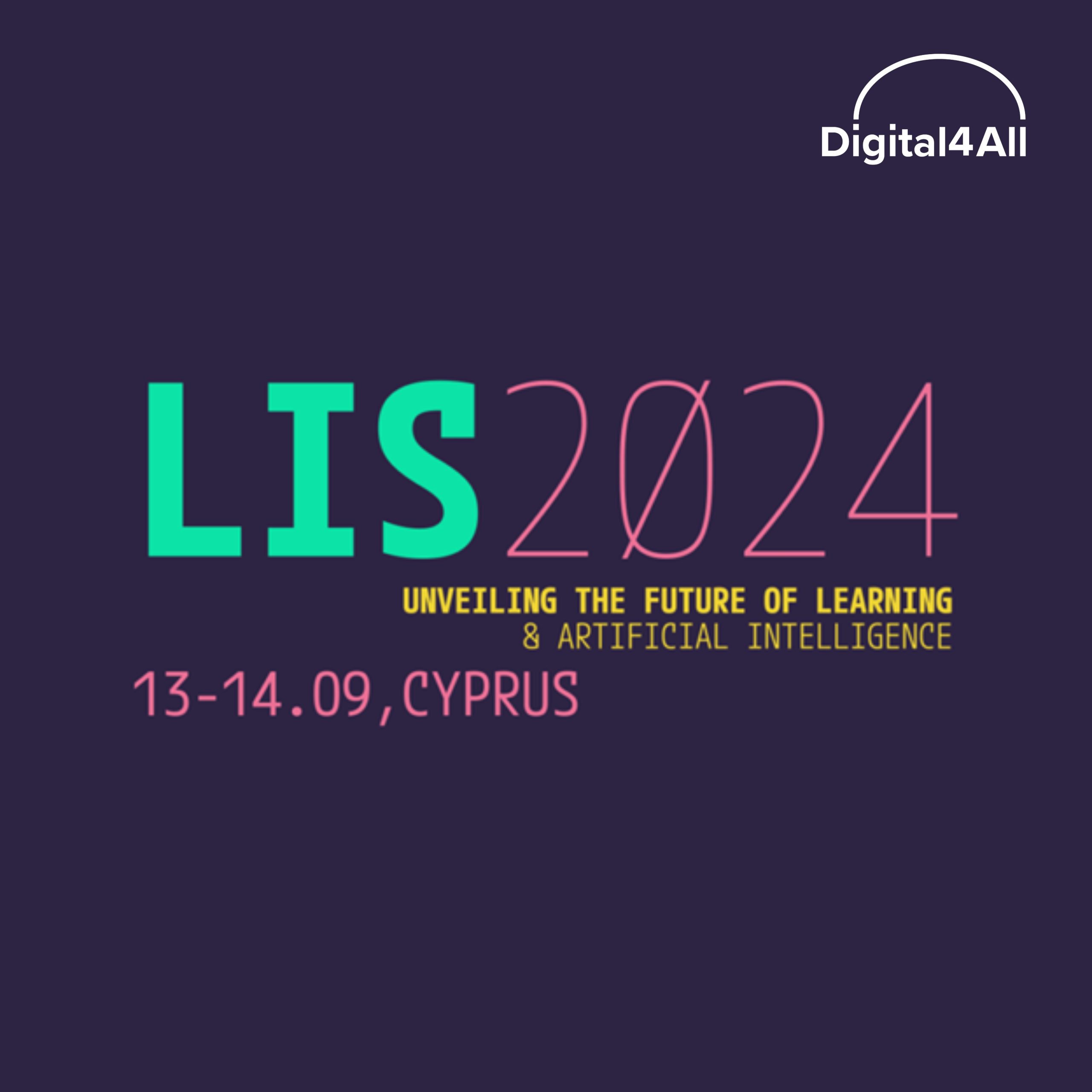
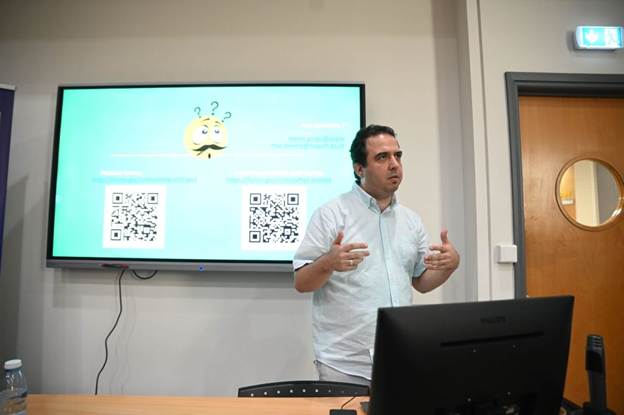
    The Digital4All project took center stage at the “Learning Innovations Summit 2024: Unveiling the Future of Learning & Artificial Intelligence,” held on September 13-14, 2024. Organized by CARDET in collaboration with the University of Nicosia (UNIC), University of Groningen, and University College Dublin (UCD), the summit operated under the auspices of the Cyprus Ministry of Education, Sports, and Youth.

    The summit aimed to showcase the transformative potential of emerging technologies, delving into the latest advancements in educational technology, innovative applications, and diverse perspectives poised to revolutionize learning methodologies. The event also received support from the EU-funded project LeaderAI, which focuses on learning analytics and AI for personalized learning.

    Keynote Speech

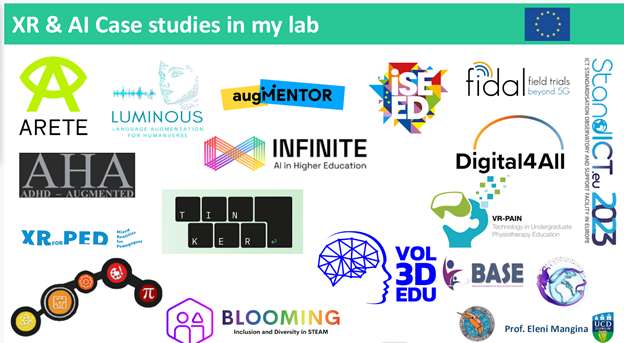
    Prof. Eleni Mangina from University College Dublin, a key contributor to the Digital4All project, delivered a compelling keynote address titled “Navigating AI and XR Opportunities for Education: Case Studies and Critical Perspectives.” Her presentation examined the transformative roles of Artificial Intelligence (AI) and Extended Reality (XR) in contemporary education. Through a series of real-world case studies, Prof. Mangina demonstrated the practical applications of these technologies across various educational settings, shedding light on both their successes and inherent challenges. She also critically discussed the ethical and practical considerations of implementing AI and XR technologies, offering educators valuable insights into leveraging these tools to enhance teaching and learning globally.

    The Digital4All project, dedicated to promoting inclusive and equitable digital learning experiences in higher education, was prominently featured among several innovative initiatives currently underway at UCD. The project’s focus on harnessing AI to enhance professional and pedagogical practices in higher education aligns seamlessly with the summit’s overarching the theme of exploring the future of learning through artificial intelligence.

    Parallel Sessions

    In the parallel sessions, Dr. Levent Görgü from University College Dublin presented a paper at LIS2024, focusing on the integration of AI into educators’ teaching practices through tailored professional development. The study emphasized the importance of critical AI literacy, aiming to deepen educators’ understanding of AI, promote ethical awareness, and encourage responsible AI adoption in higher education. Utilizing a design-based research methodology, the study developed and evaluated a comprehensive critical AI literacy workshop. Participants included educators specializing in science education and communication, who engaged in workshops grounded in social constructivist learning principles to foster a critical perspective on AI’s educational applications. The session sparked meaningful discussions on the necessity of critical AI literacy in shaping the future of education, highlighting the ongoing need for research and collaboration to develop innovative, equitable, inclusive, and critically engaged educational practices.

  • Digital inclusion in education

    Digital inclusion in education

    In recent years, higher education in Europe has undergone a significant transformation with the widespread adoption of digital teaching practices. This shift has brought many benefits, allowing for greater flexibility, connectivity, and access to a wealth of educational resources.

    However, as digital teaching becomes more mainstream, it has also highlighted persistent inequalities. For instance, students with different disabilities, low socio-economic status or students from marginalised groups have a higher risk of facing inequalities in digital teaching and learning. (OECD, 2023)

    So, what is digital inclusion in education?

    Digital inclusion in education focuses on overcoming barriers to participation in digital learning environments based on student differences. It emphasises the need to ensure that digital tools used in education are not only accessible but also designed in a way that promotes the active participation and inclusion of all learners. By embracing digital inclusion, higher education institutions can create a more equitable and supportive learning environment for all students.

    Efforts to promote digital inclusion involve adapting teaching practices, curriculum design, and technological tools to cater to the diverse needs of students. This may include providing alternative formats for digital content, ensuring compatibility with assistive technologies, and offering personalised support to students with varying learning requirements.

    By prioritising digital inclusion in higher education, institutions can empower students from all backgrounds to fully engage with digital learning opportunities and succeed academically. In conclusion, while digital teaching has become a cornerstone of higher education, it is essential to recognise and address the inequalities that persist in digital teaching and learning. Embracing digital inclusion is crucial in ensuring that all students have equal opportunities to thrive in the digital age. By fostering inclusivity and accessibility, higher education institutions can create enriching learning experiences that benefit every learner, regardless of their background or circumstances.

  • Strengthening universities’ readiness in supporting all learners to equally participate in digital learning experiences

    Strengthening universities’ readiness in supporting all learners to equally participate in digital learning experiences

    Europe is home to close to 5000 higher education institutions, 17.5 million tertiary education students, 1.35 million people teaching in tertiary education and 1.17 million researchers (Eurostat, 2022). During the COVID-19 pandemic, educational institutions across Europe had to switch to distance education. This affected half of the students’ world population, asking them to adapt to virtual modes of education (UNESCO, 2021).

    However, despite the significant shift towards digital education, there is a lack of systematic approaches and practices to holistically address the development of resilient digital higher education systems.

    To respond to the emerging needs, Digital4All project aims at strengthening universities’ readiness, faculty, and staff’s skills in supporting all learners to equally participate in digital learning experiences.

    Through coordinated efforts like the Digital4All project, the European higher education landscape is striving to create a more accessible and equitable digital learning space for all students.

  • Kick-off Meeting marks the beginning of Digital4All project

    Kick-off Meeting marks the beginning of Digital4All project

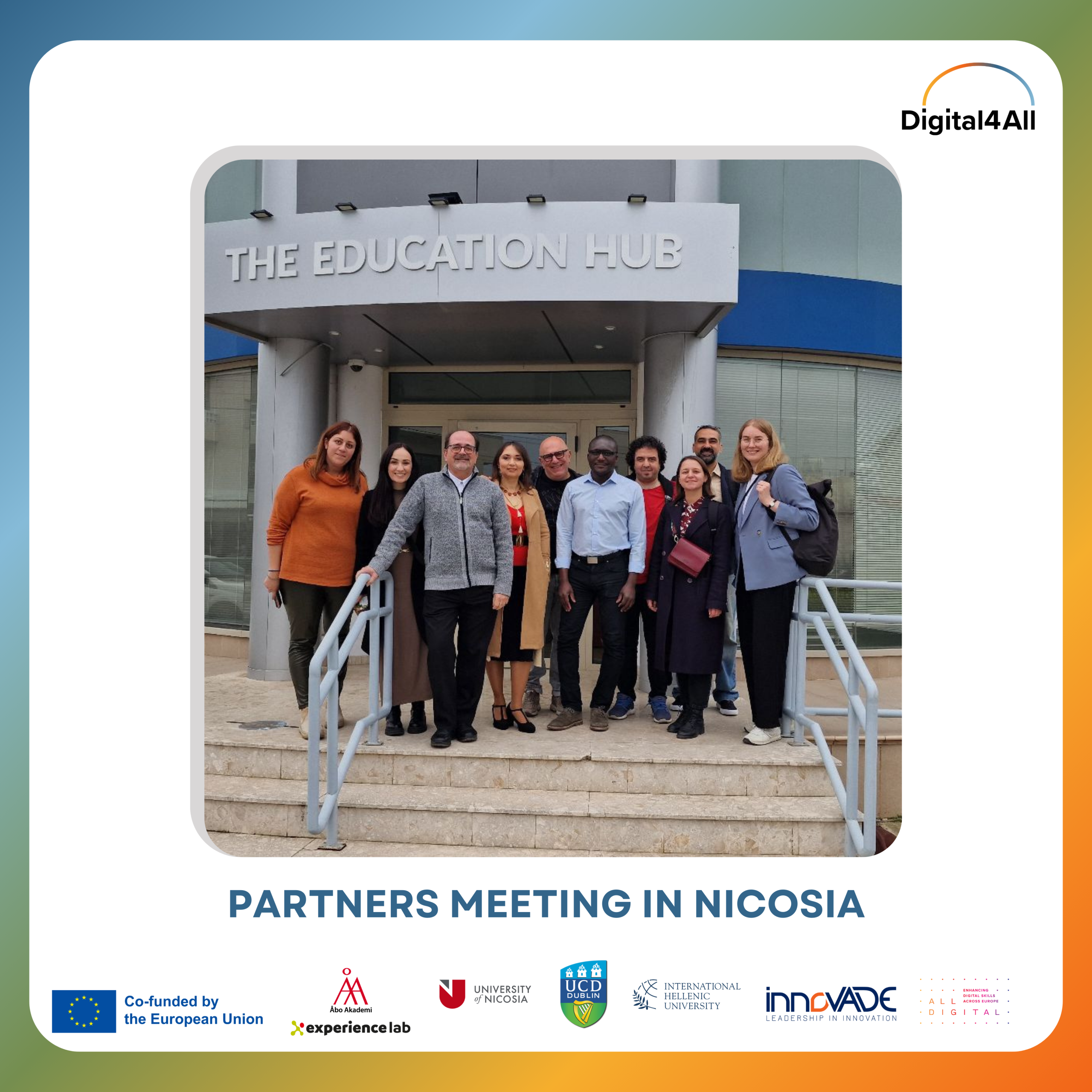
    On the 13th and 14th of February Digital4All project partners met in Nicosia, Cyprus to kick start the work on this exciting project.

    Representatives from six project partners ABO Akademi (Finland – Coordinator), University of Nicosia (Cyprus), University College Dublin (Ireland), International Hellenic University (Greece), Innovade LI (Cyprus), and All Digital (Belgium), gathered with a shared commitment of advancing digital inclusion in higher education.

    Throughout the duration of the meeting, project partners discussed the overarching goals and aims of the project and agreed on the concrete steps to be taken in the development of the first tangible project results.

    Stay tuned for more info about the project and its results – many exciting things are coming!